Water Safety Planning
Water safety planning is a comprehensive risk assessment and risk management approach that encompasses all steps in a drinking-water supply chain, from catchment to consumer. A Water Safety Plan (WSP) is a plan to ensure the safety of drinking water through this approach.
The World Health Organization (WHO) recognises WSP as the most reliable and effective way to manage drinking-water supplies to safeguard public health. WSPs provide a proactive approach to ensure water safety through good management of the complete water supply system. This involves understanding the complete system, identifying where and how problems could arise, putting barriers and management systems in place to stop the problems before they happen and making sure all parts of the system continue to work properly.
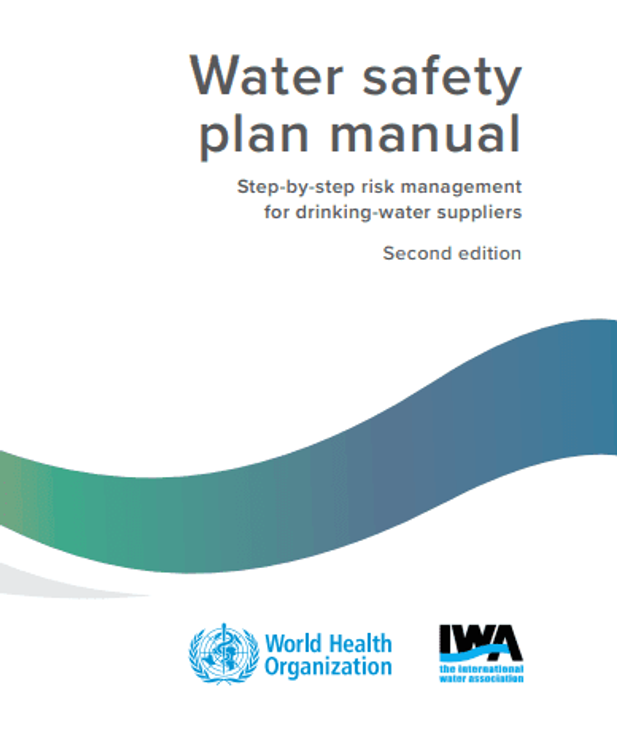
Water Safety Plan Manual
Second edition
To assist water service providers in developing and implementing WSPs, the World Health Organization (WHO) and the International Water Association (IWA) developed a WSP manual in 2009. Following global uptake of WSP and over 10 years of practical experience, an updated WSP manual (second edition) was developed in 2023 to provide guidance on the integration of climate resilience and equity into the water safety planning approach, to help support access to safely managed drinking-water services for all users, despite growing uncertainties from a changing climate.