Climate Smart Resilience: Sierra Leone’s strategies for ensuring supply
Published on Feb 4, 2025
Guma Valley Water Company was established in 1961 to serve 400,000 people in the city of Freetown, the capital of Sierra Leone. Currently, its mandate has increased to serve 1,700,000 people together with the municipality of Waterloo and all the communities around the Peninsular, which were formerly under the utility company, Sierra Leone Water Company (SALWACO). With a total average annual population growth of 3.1%, daily production of only 72,000 megaliters per day (MLD) and a gap in supply of 190 MLD, a huge tendency of encroaching on catchment and the green belt, water sources will soon be depleted. Due to the increasing population, increased economic activities, changing consumption patterns, and poor utility management in the last decade, per capita supply has dropped from about 150 l/c/d in 1961 to the present 40 l/c/d in the coverage area. Given these indicators, there is a pressing need to manage the available water resources effectively to ensure long-term supply for Freetown’s inhabitants.
Again, the impact of deforestation is affecting the utility’s catchments in Mile 13, Hamilton, Mambo, and Bango Farm. The Ministry of the Environment and Climate Change and the Ministry of Water Resources and Sanitation are relentlessly pushing the Ministry of Lands, Housing, and Country Planning to limit the number of permits issued to new landowners around the catchments. However, it is an uphill battle due to the scarcity of well-situated lands. In the early 2000s, during Sierra Leone’s civil war, many individuals from rural areas sought refuge in Freetown for security reasons. To accommodate this influx, new communities were permitted to develop within the buffer zones of the designated Green Zone. Unfortunately, these migrants have not returned to their original homes and continue to reside on the periphery of vital catchment areas. Their activities, including wood felling, charcoal burning, and stone mining, exert significant pressure on the region’s natural resources. In response, authorities have relocated two quarries from the Western Area Protected Area National Park (WAPNAP) to mitigate the environmental impact caused by these settlers.
Adapting to climate change
Guma Valley Water Company considers adaptation as one of its key pillars to climate smart vision. As a response to this, the utility has taken several steps to improve its resilience in the face of climate change.
One of the most significant actions taken is source water diversification. The utility has invested in developing new sources of water to reduce its reliance on a single source, which is vulnerable to the effects of climate change such as droughts and floods. In the next two years, GVWC will invest more than USD 200 Million in developing new sources and repairing ageing infrastructure.
The utility makes use of technology by monitoring temperature variation, precipitation pattern and the main reservoir levels daily. This is achieved through inter-agency partnerships with the SLMet, the National Water Resources Management Agency (NWRMA) which employ a combination of staff gauges, hydromet stations, rain gauges and thermometers, installed around the catchments.
To mitigate the impacts of climate change, GWVC has implemented robust drainage and flood management systems. These include a spillway into the No. 2 stream, designed to effectively direct excess stored water to the ocean during periods of heavy rainfall.
Recognising the challenges posed by climate variability, GWVC has implemented a water rationing regime to ensure equitable distribution of the limited water supply. Currently, this regime provides 8 hours of daily supply to three administrative areas within the mandated service area. This ensures minimal wastage while ensuring all areas have the minimum daily supply. GWVC’s long-term objective remains the restoration of 24/7 water supply to all customers within its service area, a crucial step towards ensuring water security and resilience in the face of climate change.
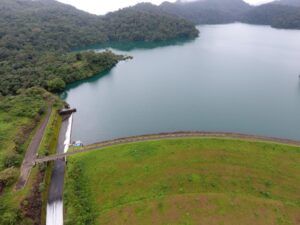
Figure 1: Guma Dam seen from above when over-spilling
Mitigation actions
One of the most impactful measures undertaken by the utility is reducing greenhouse gas (GHG) emissions through resource recovery. GVWC has installed a mini-hydro station which generates electricity and significantly reduces continuous need for fossil fuels. Regular maintenance of this hydro station ensures its optimal performance and longevity.
Additionally, Guma Valley Water Utility has implemented comprehensive energy efficiency actions such as investing a total of GBP 38 million between 2020 and 2022 to overhaul its systems. This included upgrading to energy-efficient pumps and motors, rehabilitation of filter beds, and optimising back-wash operations. These improvements have not only reduced GHG emissions but also reduced operational costs, enhancing the utility’s long term sustainability goals.
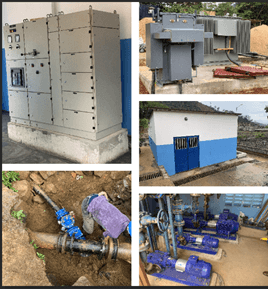
Figure 2: New energy savings and NRW investments
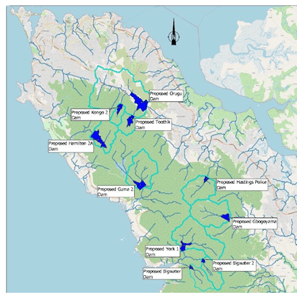
Figure 3: Locations of New Water Sources in the Master Plan Study (2020-2050) in the high regions of the Western Area Park
Leadership
The utility adopted a proactive approach to lead and inspire others to take action towards a water-wise future. In line with the Paris Agreement and Rome Dialogue on Water, the Ministry of Water Resources and Sanitation is partnering to work with the company and international agencies to advance sustainability and smart approaches to water supply. GVWC is contributing through the following key initiatives:
- Empowering Citizens for Water Conservation: GVWC is committed to raising public awareness by providing customers with information on how they can conserve water and reduce their environmental footprint. In 2022, the company spent close to $50,000 in radio communications and public broadcasts to drive community engagement in conservation efforts.
- Fostering Innovation through a Learning Culture: To encourage continuous improvement and innovation, the utility has established a Planning, Research and Development (PRD) unit in 2018. This unit identifies new technologies and best practices that can improve the utility’s operations, reduce environmental impact and move towards the utility’s Net-Zero goals.
- Developing Technical Expertise: Recognising the importance of capacity building, GVWC encourages middle-level engineers to undertake post-graduate studies abroad. In 2021, the utility spent $100,000 on exchange programmes and also allocated $20,000 in 2022 for paid study leave every year for their engineers. The utility believes that this will enhance technical skills and enable high-level data analysis and prediction of water use patterns.
Lessons learned
- Use an inspiring vision and bold goals that can motivate action and drive change. A slogan “WATER FOR ALL BY 2028” was developed in 2017 to motivate the company.
- Embed climate action in governance and planning by making climate adaptation and mitigation an integral part of governance, strategies, operations, led by example. GVWC is the key motivation force in an Inter-Ministerial committee of Eight (8) Ministries, Agencies and Departments (MDAs) on catchment protection set up by the Chief Minister in 2020 to limit the impact of encroachment and deforestation.
- GVWC, CRS and NWRMA are building a Water Fund for planting 1,000,000 trees and protecting the catchments around the country.
- Build partnerships and collaborate with other utilities within regions, share resources, expertise, and knowledge to accelerate progress with other utilities such as Ghana Water, Uganda Water and Sewerage Corporation etc.
- Invest in innovation. In 2021, 5,100 ultrasonic pre-paid and post-paid meters have been procured of which 3,600 have been installed on premises and businesses to control water wastage and boost revenues, at a cost of USD 1.5M. GVWC plans to install 56,000 meters over the next five years. We are moving towards Universal Metering (100%) by 2028.
By Dr. Francis Lahai, Deputy Managing Director, Guma Valley Water Company